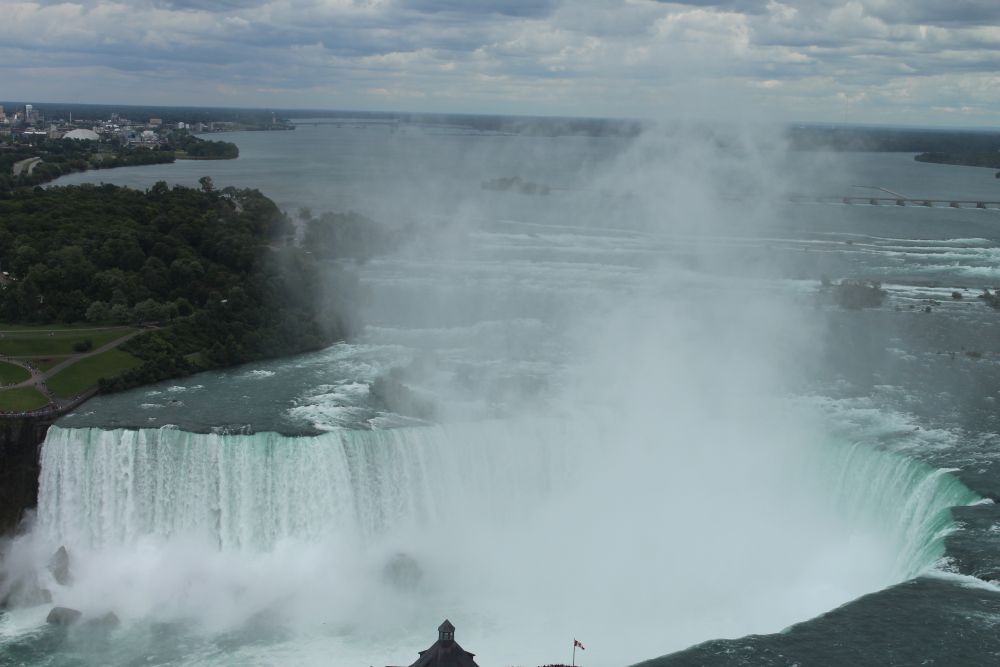
Niagara Falls and the border area viewed from a hotel room
USA ↔ CanadaRainbow Bridge · Lewiston-Queenston · Whirlpool

Crossing the Niagara Border

The Falls are one destination split between two countries. This practical guide explains how to walk or drive between Niagara Falls, New York and Niagara Falls, Ontario with documents, wait-time strategy, tolls, customs steps, and trip-planning choices for 2026.

24/7
Rainbow Bridge vehicle crossing
1
pedestrian bridge at Niagara
15–25
minutes to walk plus customs
$6
typical passenger-vehicle toll since 2025
2
border inspections on a round trip
Quick Answer

For most tourists: walk Rainbow Bridge if you can, drive Lewiston-Queenston if you must move luggage.

Rainbow Bridge is the most visitor-friendly Niagara crossing because it sits between the two tourist districts and permits pedestrians. It gives excellent gorge and waterfall views and avoids parking a car twice. Use it when your plan is “see both sides in one day.”

Lewiston-Queenston Bridge is better when you are arriving from Buffalo/Toronto, driving onward, carrying luggage, using an RV, or trying to avoid the tight tourist core. Whirlpool Rapids Bridge is mainly useful for NEXUS members.

Trip-planning summary
Bring documents before you bring the camera.
Best for walkingRainbow Bridge
Best for through-drivingLewiston-Queenston
Fastest for approved membersNEXUS lanes
Worst timesummer weekends, holidays, event nights
Must-havepassport / approved travel document
Choose Your Crossing

Three Niagara bridge options, three different use cases

The biggest mistake visitors make is assuming every bridge works the same way. At Niagara Falls, your choice determines whether you can walk, how close you are to the Falls, and whether NEXUS matters.

Tourist favorite

Rainbow Bridge

Connects Niagara Falls, NY with Niagara Falls, Ontario, right by the Falls tourist district.

  • Only Niagara Falls Bridge Commission crossing open to pedestrians.
  • Best for walking between the two waterfronts and taking photos over the gorge.
  • Works for cars, bikes, and pedestrians; check live traffic before driving.
  • Expect the biggest tourist crowds on summer afternoons, holiday weekends, and fireworks nights.
Driving strategy

Lewiston-Queenston Bridge

North of the Falls, linking Lewiston, NY with Queenston, Ontario.

  • Better for people driving between Toronto/QEW and Buffalo/I-190/I-90.
  • No pedestrian crossing.
  • Often a better choice for luggage, RVs, commercial traffic, or longer road trips.
  • Can still back up during peak travel periods, so check live cameras and wait estimates.
Trusted travelers

Whirlpool Rapids Bridge

A specialized crossing near the Whirlpool area.

  • Primarily for NEXUS users, not a general tourist crossing.
  • No pedestrians.
  • Useful for frequent cross-border travelers with approved NEXUS cards.
  • Not the best first choice for casual Niagara visitors unless everyone in the vehicle qualifies.
Step by Step

What actually happens at the border

There is no “open park gate” between the two sides. You are entering another country, so the process is similar whether you walk, bike, or drive.

U.S. → Canada

01

Choose bridge and lane

For walking, use Rainbow Bridge. For driving, follow signs to the Canadian inspection booths. NEXUS users should only use NEXUS lanes when every traveler in the vehicle is eligible.

02

Present documents to CBSA

Have passports/cards ready before the booth. Remove sunglasses, pause phone calls, and answer clearly.

03

Answer purpose and stay questions

Typical questions: Where are you going? How long will you stay? Where are you staying? Are you carrying alcohol, tobacco, food, firearms, cannabis, or goods for resale?

04

Proceed or secondary inspection

Most tourists are cleared quickly. If sent to secondary, park where directed and keep answers consistent with your documents and itinerary.

Canada → U.S.

01

Pick pedestrian or vehicle return

Walkers return through Rainbow Bridge pedestrian processing. Drivers line up for CBP inspection at the U.S. port.

02

Show U.S. entry documents

U.S. citizens use WHTI-approved documents at land borders. Non-U.S. visitors may need a visa, ESTA, I-94, or other immigration paperwork.

03

Declare purchases and controlled items

Be ready to declare goods bought in Canada, food, alcohol, tobacco, currency over reporting thresholds, and any items requiring inspection.

04

Finish entry formalities

Some visitors may be asked to complete or verify I-94 records. If you entered on a visa or ESTA, keep track of your admitted-until date and travel history.

Paperwork

Document matrix: what to carry in 2026

Rules depend on citizenship, residency, direction, and mode of travel. A passport book is the simplest answer for almost everyone; alternatives exist but are narrower.

Traveler typeEntering Canada from U.S.Entering U.S. from CanadaNotes
U.S. citizen touristValid U.S. passport is safest. At land crossings, acceptable alternatives may include passport card, enhanced driver’s license, or NEXUS card.WHTI land-border documents include U.S. passport, passport card, enhanced driver’s license, and trusted traveler cards such as NEXUS/SENTRI/FAST.Passport book is best if there is any chance you will fly home unexpectedly.
Canadian citizenCanadian citizens enter Canada by right. A valid Canadian passport is the universally accepted document for returning to Canada.Use a valid passport or other accepted WHTI land-border document, depending on eligibility.Carry proof of citizenship and identity; a passport avoids most ambiguity.
U.S. lawful permanent residentCarry valid passport and proof of U.S. permanent residence, such as a Green Card; Canada lists acceptable U.S. PR documents.Carry valid Permanent Resident Card to return to the U.S.; passport may also be needed depending on nationality and situation.Check whether your citizenship requires a Canadian visa for land entry.
International visitor already in U.S.You need a valid passport plus whatever Canada requires for your nationality. Visa-required nationals need a Canadian visitor visa for land entry; eTA is generally for air travel, not car/bus/boat land entry.You need valid U.S. status to re-enter. Depending on your nationality/status, this may mean visa, ESTA, I-94, passport validity, and proof of onward travel.Do not assume a U.S. visa lets you enter Canada. Do not assume Canada entry guarantees U.S. re-entry.
Children / minorsCarry the child’s ID/passport. If not travelling with both parents/legal guardians, carry a consent letter and custody documents if applicable.Carry the child’s accepted ID/passport and any custody/consent documents that explain who may travel with the child.Border officers watch carefully for missing or runaway children; documents prevent delays.
NEXUS membersNEXUS can expedite entry at designated lanes/ports for approved low-risk travelers.NEXUS can expedite return to the U.S. at designated lanes/ports.Every person in the vehicle generally needs to be NEXUS eligible to use NEXUS lanes; still carry passport/proof of residence.

Important: visa and admissibility rules can change by nationality and personal history. Check official CBSA, IRCC, and CBP sources before travel, especially if you are not a U.S. or Canadian citizen.

Time & Waits

How long should you budget?

The bridge crossing time and the border inspection time are different. Your photos on the bridge may take longer than the walk itself; your customs wait depends on traffic, staffing, holidays, and whether you are sent to secondary inspection.

15–25

Minutes to walk

Walking Rainbow Bridge at a relaxed pace with photos is often a 15–25 minute experience before adding inspection time.

0–60+

Possible wait range

Off-peak inspection can be quick; summer weekends, holidays, and evening return traffic can stretch waits much longer.

2–3 hrs

Safe buffer

For dinner reservations, tours, or fireworks plans across the border, build in a real buffer rather than cutting it close.

Hourly

Check live sources

Use Niagara Falls Bridge Commission traffic/wait tools and CBP border wait pages before committing to a bridge.

Route Ideas

Two smart ways to see both sides

Plan the border around your day, not the other way around. Here are two practical patterns that work for most visitors.

Daytime Niagara Falls view
Best no-car option

Walk both sides in one day

Park once or stay downtown, then walk Rainbow Bridge. This is ideal if your goal is viewpoints, photos, lunch, and the evening illumination.

Morning: Niagara Falls State Park + Goat IslandMidday: walk Rainbow Bridge to CanadaAfternoon: Table Rock + Queen Victoria ParkNight: illumination/fireworks, then walk back or stay Canada side
Niagara Falls boat tour
Best with luggage

Drive through, then park once

Use Lewiston-Queenston if you are arriving from Toronto or Buffalo with bags, then park near your hotel or the Falls and explore on foot.

Check live wait times before leavingKeep passports and hotel details in front seatDeclare purchases and food clearlyAvoid crossing right after fireworks when crowds move at once
Checklist

Before you cross

These details are easy to miss and can turn a short crossing into a stressful delay.

Documents

  • Passport or approved land-border document for every traveler.
  • Visa/eTA/ESTA/I-94 status checked for non-U.S./Canadian citizens.
  • Minor child consent letter when one parent/guardian is absent.
  • Hotel address, return plan, and tour reservations handy.

Vehicle

  • Driver’s license, registration, and proof of insurance.
  • Rental-car agreement allowing cross-border travel.
  • No prohibited items, weapons, cannabis, or undeclared goods.
  • Fuel/charging plan if continuing beyond Niagara.

Timing

  • Check Bridge Commission and CBP wait times before leaving.
  • Avoid peak weekend/holiday afternoon crossings if possible.
  • Build a 2–3 hour buffer before paid tours or dinner.
  • Expect extra traffic around fireworks, concerts, and long weekends.

Money & tolls

  • Vehicle tolls on NFBC bridges increased in 2025; passenger vehicles are commonly posted at US$6 / C$8.50.
  • Rainbow Bridge pedestrian toll is collected going into the U.S. only.
  • Keep a card plus small cash/coins as backup.
  • Currency exchange near tourist areas may be less favorable.

Food, shopping, customs

  • Declare what you bought, including gifts and duty-free purchases.
  • Food, plants, and animal products may be restricted.
  • Alcohol and tobacco have age/duty rules.
  • Do not bring cannabis across the border, even if legal on both sides locally.

Admissibility issues

  • Past criminal convictions, overstays, immigration violations, or work/visa confusion can create problems.
  • Tourist entry is not work permission.
  • Answer officers truthfully and consistently.
  • If your situation is complicated, verify before arriving at the bridge.
Traveler Questions

Practical border-crossing FAQ

Is the Canadian side worth crossing for?

Yes, if you want the classic panoramic view of all three falls, Fallsview hotels, Skylon Tower, Journey Behind the Falls, Clifton Hill, and the broad Queen Victoria Park promenade.

Is the U.S. side worth crossing for?

Yes, if you want the most natural park setting, Goat Island, Terrapin Point, Prospect Point, Cave of the Winds, and the feeling of standing close to the brink.

Can I cross just for lunch or dinner?

Usually yes, but treat it like any international entry. Carry documents, declare purchases, and leave enough time to return. Weekend dinner-and-fireworks crowds can make crossings slower.

Can I use a Real ID driver’s license?

Do not rely on a standard Real ID alone for international land-border entry. Enhanced driver’s licenses are different from Real ID and are only issued by certain states/provinces.

Can I take a rental car?

Often yes, but only if your rental agreement permits cross-border travel. Confirm with the rental company and carry the agreement plus insurance details.

What if I do not have a passport?

Postpone the crossing unless you have another accepted land-border document for your exact citizenship/status. You can still enjoy the Falls from one side without crossing.