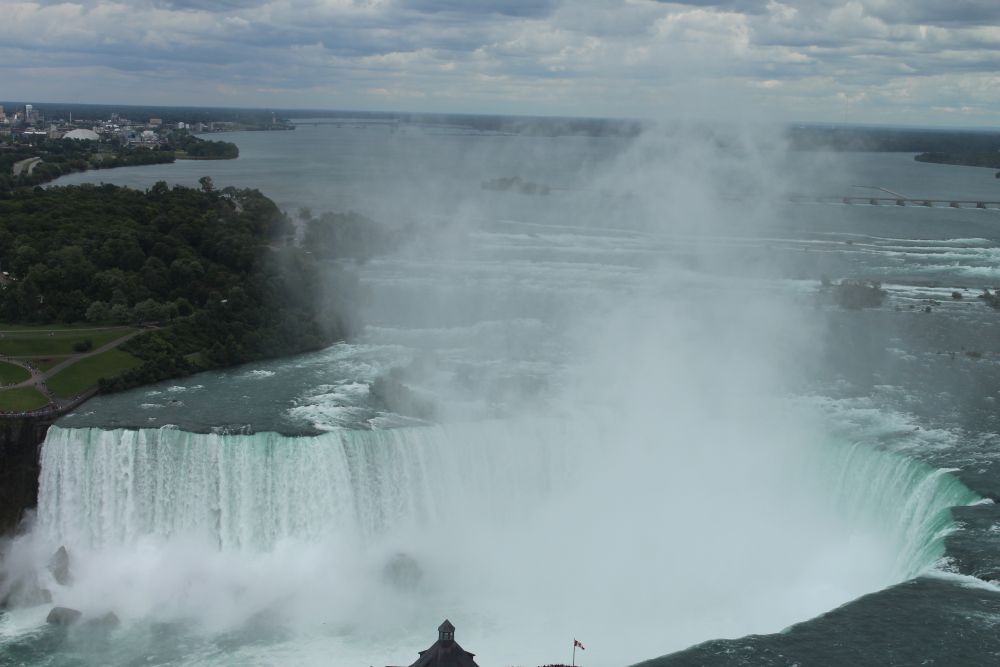
Niagara begins as geology. After the last Ice Age, meltwater from the Great Lakes system began moving through the Niagara River and spilling over the Niagara Escarpment. The falls did not stay in one place: erosion cut a gorge as the cataract retreated upstream over thousands of years.
Then it becomes memory. Long before railroads, hotels, bridges, and cameras, the falls were known to Indigenous peoples as a powerful place in the landscape. Stories of Onguiaahra, thundering waters, the thunder spirit, and the Maid of the Mist tied the roaring water to spiritual meaning.
Finally it becomes a modern icon. In the 1800s and 1900s, Niagara became a tourist capital, a honeymoon destination, a conservation victory, a daredevil arena, and a global symbol of hydroelectric power.

